‘Ozempic Face’ Arrives In India As Cheap Semaglutide Generics Spark Weight-loss Rush And Safety Concerns
 380 Reads
 9 minutes read

India is seeing a surge in semaglutide use after Ozempic’s patent expiry. Doctors caution the diabetes drug is not meant for cosmetic weight-loss.
Anyone who suddenly shows up with a slightly gaunt, aged appearance- noticeable hollowing of the cheeks, more prominent cheekbones, loose or sagging skin around the mouth and eyes, sets eyes rolling. Can it be an ‘Ozempic face’? A term coined by celebrity cosmetic dermatologist Dr. Paul Jarrod Frank. He began using it in early 2023 to describe drug-related side effects he was seeing daily in his practice.
Although the term comes from the diabetes drug Ozempic, the look is linked to rapid weight loss. When people lose weight quickly, they lose fat under the skin… not just on the stomach but also on the face. This makes them look thinner, but it can also make them look older. For a couple of years now, Bollywood gossip columns have been sharing rumoured ‘Ozempic looks’ of celebrities, including top directors and actors. However, now we might find more and more regular people spotting such looks in the streets, cafes, and cinema halls.
Following the patent expiry on March 20, 2026, Semaglutide, the active ingredient in Ozempic, has entered the Indian market through cheaper generic drugs, bringing prices down by as much as 80% and significantly widening patient access. This drug, which was designed for chronic diseases like diabetes and morbid obesity, seems to be in a grey zone in India. The scheduled drug has grave side effects but is being seen as a lifestyle solution. Experts advise distinguishing between therapeutic use and aesthetic goals. However, there is an increasing overlap among Indian users.
Science Behind The Surge
For years, drugs designed for chronic diseases, mainly diabetes, have been used for weight loss. Metformin occupied this space; it was occasionally used for modest weight loss and even sometimes for diseases like Polycystic Ovaries (PCOS). However, its identity has always been that of metabolic medicine. With Semaglutide, the scenario has changed. A new class of medicines, led by Semaglutide (Ozempic and Wegovy), which began as a treatment for diabetes to lower blood sugar, rapidly became the backbone of the weight-loss industry in the West. Other medicines like Terzipetide, with the brand name Maunjaro, followed.
Dr. Anoop Misra, Chairman, Fortis-C-DOC Center of Excellence for Diabetes, Metabolic Diseases and Endocrinology, Delhi, says semaglutide and metformin cannot be compared. “Semaglutide is a fundamentally different proposition: it is a drug that needs careful handling, rather different from metformin. It produces weight loss of 10-15% of body weight, approaches that of bariatric surgery, and has cardiovascular and kidney outcome data to support it, which has made it the centrepiece of a rapidly commercialising global weight loss industry,” he said.
How Does It Work?
Semutigludite is the active ingredient in Ozempic and other similar drugs. Originally designed as a diabetes lifesaver to bring down blood sugar, it is now known to trick the brain to kill one’s appetite. The medicine works by mimicking gut hormones to regulate blood sugar, suppress appetite, and prolong satiety. This makes them highly effective in managing type 2 diabetes and obesity.
It works in several ways in the gut and brain. Experts say it reduces “food noise”, so people have fewer cravings for high-calorie, sugary, or fatty foods. By mimicking the natural GLP-1 hormone (which has 94% similarity to human GLP-1), it enhances feelings of fullness even with reduced food intake. “Semaglutide activates GLP-1 receptors in the brain’s appetite centres, like the hypothalamus and brainstem. This reduces hunger and food cravings. It also slows how quickly food leaves the stomach, which makes you feel full longer,” says Dr. Aijaz Ilmi, Head of Preventive Wellness and Metabolic Diseases at Pacific One Health.
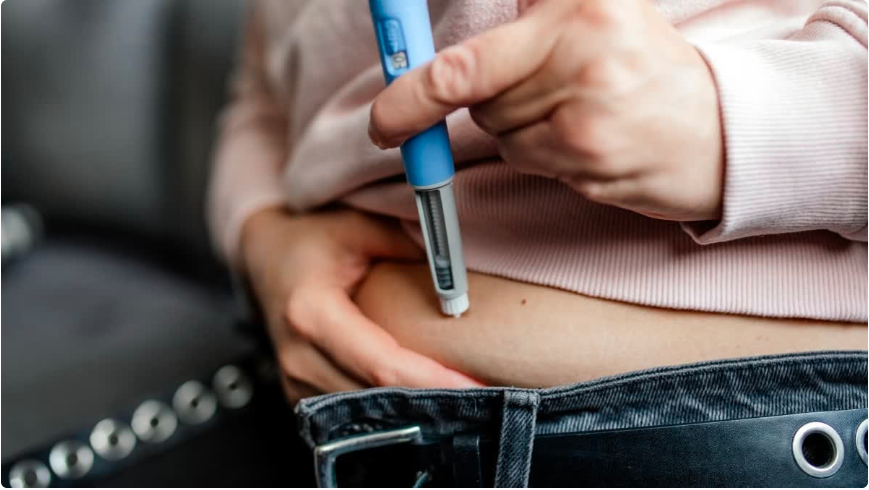
Clinical trials have shown that a weekly injection, typically administered in the abdomen, thigh, or upper arm, produces results after a few months. The average weight reduction is over 15%. However, unlike metformin, semaglutide must only be given with proper medical supervision. Treatment starts at a low dose, with side effects and risks needing close management. Common side effects are usually gastrointestinal, such as nausea, vomiting, and diarrhoea. Dr. Ilmi says, “Without the right strategy, the medicine doesn’t just cause fat loss but also leads to loss of lean muscle mass and reduction in bone density’’. “If 60% to 70% fat is lost, there is also about 40% loss of lean muscles and bone density as well,” he adds.
Nutritionist Dr. Shikha Sharma, scientific advisor at Ranfort Wellness, says, “The drug reaches the stomach and activates a few receptors, so instead of passing food in a specific time, the stomach retains food and passes it out in maybe double the time. So during that time you won’t feel hungry’’.
“However, if you force food to stay in the stomach, it can rot and ferment there, which may cause several problems,” Dr. Shikha adds. Both doctors say that pancreatitis, kidney disease caused by severe dehydration from gastrointestinal issues, diabetic retinopathy complications in the eyes, and a potential, though unproven, risk of thyroid C-cell tumours are concerns.
Semaglutide Is No Swimsuit Drug
More affordable generic versions of the drug have changed weight-loss expectations in India. “This is the first time we have seen a drug produce weight loss that is at the scale of surgical interventions like bariatric surgery. But we also know that this is a scheduled drug and there has to be sensitivity in prescribing practices,’’ says Atul Sharma, drug expert and pharma and healthcare consultant.
The drug’s effectiveness in weight loss also blurs boundaries. Doctors say that certain patients without diabetes and without clinical or morbid obesity, are seeking these drugs. “A young girl came to me seeking therapy because she had a wedding in the family. I had to explain all the risks involved so that she doesn’t seek the treatment elsewhere after my refusal,’’ said Dr. Ilmi. “This is not a drug to get into a bikini, it is associated with serious health concerns,’’ he added.
Dr. Misra expresses similar concerns. “My principal concern is that reduced prices and widespread availability, without regulatory guardrails, will accelerate indiscriminate use, particularly among young people seeking cosmetic weight loss without any metabolic indication, exposing themselves to side effects like nausea, muscle loss, and potential pancreatitis and thyroid risks with no therapeutic justification,’’ he says. Dr. Sharma adds the drugs are not cosmetic; they “alter metabolic pathways and using them without proper indication or supervision is risky.”
Impact Of Patent Expiry
In India, where people often do not follow pharmaceutical regulations, high costs of branded drugs have been a natural barrier to misuse. Imported semaglutide was expensive and hard to get. This, however, is about to change as the expiry of the semaglutide patent has dramatically opened the market. Dozens of pharmaceutical companies have launched generic versions, potentially driving the prices down and making them affordable. The drug has the potential of shifting from a high-cost drug used by a limited population to a product with mass market appeal.
Ozempic is officially available in India for treating type 2 diabetes and, under medical supervision, for weight management. Weekly injection prices range from approximately Rs. 8,800 to Rs. 11,175 per pen, or around Rs 30,000 per month. Generic versions cost between Rs. 1,200 and Rs. 1,500 per vial per week, making the monthly cost as low as Rs 5,000 or Rs 10,000. Cheaper versions are also expected soon.
“In India, the patent situation is unique unlike the US and Europe, where Novo Nordisk’s exclusivity runs until 2031-32, Indian patent law permitted early generic entry, and we now have more than 30 branded generics launched within days of each other, driving prices down dramatically,’ Dr Misra informs. “The initial global buzz is a little bit stabilised but continues to surge in India in regions where these drugs were sparingly used. We need to be mindful of weight regain upon stopping and the need for indefinite use,” he adds.
The wider availability of the drug increases the likelihood that it may be accessed through various channels, including urban clinics, online platforms, and informal sources where prescriptions may not always be required. With the cheaper versions in the market, the drug sales have already shown a spike. Sales of semaglutide have spiked in India following the expiration of Novo Nordisk’s patent on March 20, 2026. The sales surged nearly sevenfold in the last 10 days of March 2026.
“The sales have surged sevenfold in volume growth and twice in terms of money spent,’’ Atul Sharma says. “When volume is increasing, it is no longer a rich person’s drug; it is reaching other socioeconomic classes also, but we have to make sure these are people who actually require the treatment,” he says. “India is not only the world’s capital of diabetes, but by 2050, half of India’s population will also be obese. So there is a huge market of genuine patients already in India. We have to make it so that it is not available without medical supervision and patients are aware of the side effects,’’ he adds.
Causes Chronic Health Conditions
The drug has to be driven by diabetes and clinical obesity, and not cosmetic weight loss. Regulators seem to be anticipating the shift and tightening surveillance. As of April 2026, semaglutide in India is heavily regulated as a prescription-only drug due to rising misuse, requiring strict medical supervision by endocrinologists, cardiologists, or internal medicine specialists. Prescriptions have to be followed up with adequate screening and raising safety concerns.
Doctors are vocal about serious complications and also say patients need to be told that weight regain is common after stopping use of the drugs, highlighting the concerns about long-term dependency. The buzz is that the drugs have to be prescribed only for patients with a clear clinical need. “Like any other weight loss program, the weight loss management after this treatment will require self-discipline and a proper weight management program focusing on the right diet, exercise, and lifestyle changes,’’ says Dr. Shikha Sharma.
Doctors insist that the Semaglutide injection is no magic wand that, once injected into the body, will keep you looking slim and young for the rest of your life. If this is not enough, remember that the Ozempic face has become a viral term, a reminder that there must be a clear distinction and that medicine cannot be used for aesthetics or social pressure. There are the less-talked-about Ozempic hands and feet as well with more visible veins and tendons and a bonier appearance.