Breast Cancer Screening: Which Tests Do Women Need and When?
 89 Reads
 5 minutes read

Introduction
Breast cancer is the most commonly diagnosed cancer among women in India, and the gap between early and late detection makes an enormous difference to treatment complexity, recovery time, and outcomes. What works in its favour is that it is one of the cancers where screening genuinely saves lives. Women who go for regular breast cancer screening in Delhi before symptoms appear are far more likely to catch changes at a stage where treatment is straightforward rather than intensive. The challenge is that most women are unsure which tests they need, how often, and when to start, and that uncertainty often leads to inaction.
Why Early Detection Changes Everything
When breast cancer is detected at Stage 1, survival rates are dramatically better than at Stage 3 or 4. More importantly, early-stage treatment is typically less aggressive, with smaller surgeries, fewer treatment cycles, and shorter recovery. Screening doesn’t prevent cancer from developing, but it catches it before it spreads, which significantly changes the clinical picture. The early signs of breast cancer in women are not always visible or palpable, which is precisely why imaging-based screening matters more than self-examination alone.
Which Tests Are Used and What They Do
Mammography
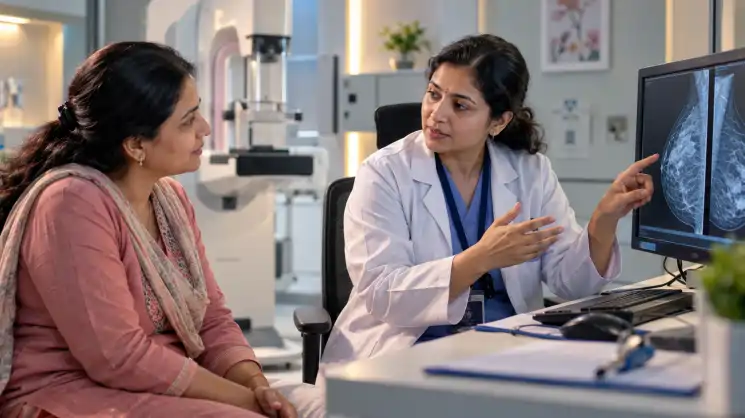
Mammography is the standard screening test for breast cancer. It uses a low dose of X-rays to create images of the breast and can pick up small masses or tiny calcium deposits long before they’re large enough to feel. Digital mammography has made results clearer, and 3D mammography, also called tomosynthesis, can reduce false alarms in women with dense breast tissue. The test usually takes about fifteen minutes, and the radiation dose is minimal.
Breast Ultrasound
Ultrasound is often used alongside a mammogram, especially for women with dense breasts, where a mammogram alone can miss some changes. It uses sound waves rather than radiation. Doctors also use it to take a closer look at a specific area noticed during a mammogram or physical examination. Ultrasound supports mammography; it doesn’t replace it.
MRI of the Breast
Breast MRI is used for selected women, mainly those with a strong family history of breast cancer, a known BRCA gene mutation, or dense breasts combined with other risk factors. It is more sensitive than mammography, but it also flags more findings that turn out to be harmless. That’s why it isn’t offered as routine screening for women at average risk.
Clinical Breast Examination
An examination by a trained doctor is still a useful part of a regular health check. It can’t detect changes as early as imaging can, but it gives you time to talk through your personal and family history, understand your risk and agree on a screening plan that suits you.
Screening by Age: A Clear Guide
Knowing the right breast cancer screening tests by age helps women plan ahead instead of waiting for a problem to appear. General guidance for women in India often looks like this, though your doctor may adjust it for you:
Under 40, average risk: A clinical breast examination as part of routine check-ups. Get familiar with how your breasts normally look and feel, so any change stands out.
40 to 49: A mammogram every one to two years, depending on your risk factors and your doctor’s advice.
50 and above: Regular mammograms, usually every year or as your doctor recommends, since risk rises with age.
Higher-risk women (family history, BRCA mutation or a previous abnormal biopsy): Screening often starts earlier, sometimes from age 30, and may include a yearly MRI along with mammography.
Indian women tend to be diagnosed with breast cancer at a younger average age than women in many Western countries. That makes it sensible to discuss starting screening early rather than relying only on guidelines written for a different population.
Signs Between Screenings That Should Not Wait
Scheduled screening is one thing but certain changes between appointments warrant immediate assessment rather than waiting for the next routine visit. These include a new lump or thickening in the breast or armpit, skin dimpling or puckering include skin that resembles orange peel, new nipple inversion, discharge from the nipple (particularly if bloodstained), and any unexplained change in breast shape or size. These early signs of breast cancer in women do not necessarily mean cancer, but they require prompt clinical evaluation.
Risk Factors That Make Earlier Screening Important
- First-degree relative (mother, sister, daughter) with breast cancer
- Known BRCA1 or BRCA2 gene mutation in the family
- Previous breast biopsy showing atypical cells
- Early menarche or late menopause
- No full-term pregnancies, or first pregnancy after 30
- Long-term hormone replacement therapy use
Women with any of these risk factors should discuss a personalised screening schedule rather than wait to follow the general population guidelines.
Conclusion
Breast cancer screening is not about finding something frightening. It’s about finding something early enough that it remains manageable. The women who benefit most are those who go regularly, before any symptom prompts the visit. If you are overdue for a mammogram or have never had one, or if you want to understand your personal risk and which tests are right for you, connecting with the top hospital for breast cancer screening in South Delhi is the straightforward next step.