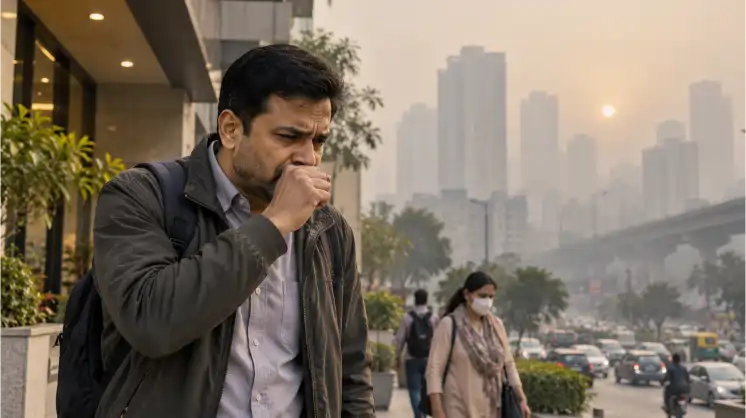
Delhi Air Pollution and Lung Health: Warning Signs You Should Not Ignore
 16 Reads
 5 minutes read

Introduction
Delhi’s air quality has become a public health issue that most residents have learnt to live around masks on bad days, windows closed through winter, and air purifiers running indoors. What’s harder to live around is what happens when that long-term exposure begins affecting the lungs in ways that don’t announce themselves dramatically. The air pollution effects on lungs accumulate slowly, and by the time symptoms are persistent enough to feel concerning, damage may already be well underway. Knowing the warning signs earlier changes what we can do about them.
What Delhi’s Air Actually Contains
PM2.5, fine particulate matter smaller than 2.5 micrometres, is the most damaging component of Delhi’s air. These particles are small enough to bypass the nose and throat, penetrate deep into the lungs, and in some cases enter the bloodstream directly. Alongside PM2.5, Delhi’s air carries nitrogen dioxide, ozone, carbon monoxide, sulphur dioxide, and volatile organic compounds from vehicle exhaust, industrial emissions, construction dust, and seasonal crop burning. Each has its own mechanism of lung damage, and prolonged exposure to their combined effect is considerably more harmful than any single pollutant alone.
Warning Signs That Pollution Is Affecting Your Lungs
A cough that does not clear
A cough that has been present for more than three weeks, particularly a dry, irritating one that worsens on high-pollution days or during the October-to-January smog season, should not be attributed to a recurring cold. Chronic airway irritation from particulate matter and nitrogen dioxide is a direct cause of persistent cough in Delhi residents without any prior respiratory condition.
Breathlessness during activities you previously managed easily
Getting noticeably breathless climbing stairs you used to take easily, or needing to pause after a short walk, is a significant change. Breathing problems due to Delhi Air pollution often presents this way: a gradual reduction in exercise tolerance that gets attributed to fitness or ageing rather than declining lung function.
Frequent chest tightness
A sensation of tightness or pressure in the chest, particularly on high-pollution days, in traffic, or early in the morning, indicates airway narrowing. This is a feature of pollution-triggered asthma and can also reflect COPD developing in long-term Delhi residents with no prior smoking history. Chest tightness that comes and goes with pollution levels is a significant sign rather than a minor inconvenience.
Wheezing
A whistling sound during breathing, particularly during exhalation, indicates narrowed airways. It can occur during exercise, at night, or upon waking. A new-onset wheeze in an adult who has never had asthma, particularly in a city like Delhi, deserves respiratory evaluation rather than reassurance.
Recurrent respiratory infections
Lungs under constant pollution stress have a weakened local immune defence. People who find themselves getting chest infections, bronchitis episodes, or severe colds more frequently than before, particularly those concentrated in winter months, may be experiencing pollution-related immune compromise of the airways. Breathing problems due to Delhi air pollution are not limited to bronchospasm; they include this increased infection susceptibility as well.
Who Is at Highest Risk in Delhi
- Children — whose lungs are still developing and whose breathing rate means they inhale proportionally more polluted air
- Older adults — with reduced respiratory reserve and often existing cardiac or pulmonary conditions
- People with pre-existing asthma, COPD, or any chronic lung condition
- People who spend significant time outdoors — construction workers, vendors, delivery workers, outdoor athletes
- Commuters in heavy traffic for extended periods daily
People in these groups should not wait for symptoms to become severe before seeking a lung function assessment. A baseline spirometry test during a period of relatively better air quality provides a reference point for monitoring change over time. Pollution-Related asthma treatment in Delhi is most effective when initiated early rather than after significant airway remodelling has occurred.
Practical Steps That Help
- Use N95 masks not surgical masks when AQI exceeds 150
- Check air quality before outdoor exercise and reschedule on high-pollution days
- Keep indoor plants and run air purifiers with HEPA filters in sleeping areas
- Avoid burning incense, wood, or other combustibles indoors
- If you have existing respiratory conditions, ensure your inhalers and medication are always current
- Get an annual lung function test spirometry if you have lived in Delhi for more than five years with any symptoms
Conclusion
Delhi’s pollution is not going away quickly, and waiting for it to improve before addressing its impact on your lungs is not a practical strategy. If you have noticed persistent cough, breathlessness, chest tightness, or frequent respiratory infections, particularly if they worsen in winter or on high-pollution days, a consultation with the best pulmonologist in South Delhi is the right response. Lung function assessment, appropriate treatment, and a management plan that accounts for your daily exposure can make a real difference to how your respiratory health holds up over the years ahead.