Early anomaly scan at 11–14 weeks: Why your baby’s first detailed check matters
 129 Reads
 4 minutes read

“Doctor, I have already had an ultrasound. Why do I need another scan so soon?”
It is a question many expecting parents ask.
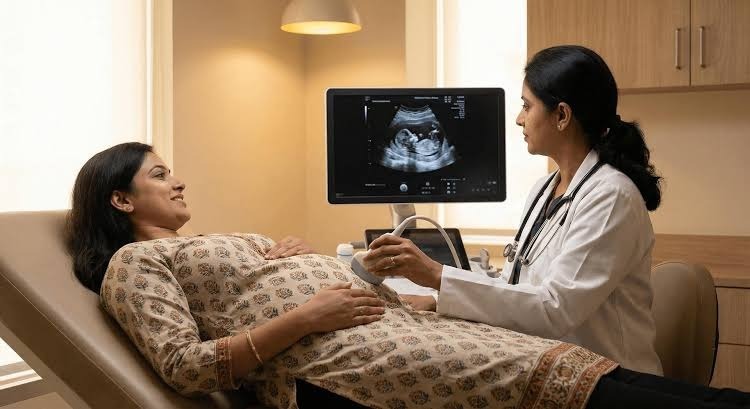
Seeing the baby’s heartbeat during an early pregnancy scan can be an emotional moment. But a scan that confirms that the pregnancy is progressing is not the same as a detailed examination of how the baby is developing.
The Early Anomaly Scan, usually performed around 11 to 13 weeks and 6 days, gives us an important opportunity to look more closely at your baby’s development. International ultrasound guidelines recognise this stage as an opportunity to assess fetal anatomy and identify a significant proportion of major structural abnormalities. (ISUOG)
More than just an NT scan
Many parents know this examination simply as the NT scan.
Nuchal translucency (NT) is an important measurement of the fluid-filled space at the back of the baby’s neck. It can help assess the risk of certain chromosomal conditions and may also be associated with some structural problems, including heart abnormalities. But NT is only one part of the first-trimester assessment. (ISUOG)
During a detailed early scan, we may assess the baby’s:
- Brain and skull
- Face and early facial structures
- Heart and heartbeat
- Spine
- Stomach and abdominal wall
- Kidneys and bladder
- Arms, legs, hands and feet
- Growth and movements
We also assess the placenta, amniotic fluid and, where appropriate, other features that can provide important information about the pregnancy. (ISUOG)
What can the scan detect?
At this stage, some major structural problems can already be identified, including certain severe abnormalities involving the brain, skull, abdominal wall, limbs, spine and other organs.
But there is an important point every parent should understand:
A normal early scan does not guarantee that every condition will be absent.
Some abnormalities become easier to see as the baby grows, while others may develop or become apparent later. That is why the 18–22-week detailed anomaly scan remains important and should not be skipped simply because the early scan was normal. (ISUOG)
Is this scan only for high-risk pregnancies?
The 11–14-week ultrasound has an important role in pregnancy assessment, but exactly which examinations are recommended depends on the individual pregnancy, clinical history and local practice.
Your doctor may particularly emphasise detailed early assessment when there are factors such as a previous pregnancy affected by a structural or genetic condition, multiple pregnancy or other clinical concerns.
If your doctor recommends the scan, it is worth understanding what the examination is intended to assess, rather than thinking of it simply as another routine ultrasound.
One scan cannot tell the whole story
Sometimes parents become anxious when an NT measurement or another finding is outside the expected range.
An unusual finding does not automatically mean that the baby has a problem. It may mean that additional assessment, screening or specialist consultation is advisable. NT is a screening marker, not a diagnosis by itself. (ISUOG)
This is why the scan should always be interpreted in the context of the baby’s overall development and the mother’s clinical history.
From my ultrasound room
One of the most beautiful moments is watching parents see their baby’s tiny hands, feet and movements for the first time.
They see a little baby moving on the screen.
I see something more: an opportunity to carefully examine how that baby is developing.
A beautiful ultrasound picture is wonderful. Understanding your baby’s development is the real purpose of the scan.
The Early Anomaly Scan is therefore not simply “another pregnancy scan”. It is an important early opportunity to look at your baby’s development, identify findings that may need further assessment and give parents meaningful information at a stage when there is still time for appropriate counselling and planning.
The first trimester is a small window, but it can provide a remarkably valuable first look at your baby’s development.
(The author is Principal Consultant – Radiology, Pacific OneHealth Hospital, Lajpat Nagar, New Delhi, Specialising in USG-Guided MSK Interventionist Radiology.)