India is polio-free. So, can you skip your child’s polio drops? The answer every parent needs to know
 51 Reads
 3 minutes read

By Dr Neeta Kejriwal
Your child looks healthy. Polio seems like a disease from your grandparents’ generation. And when someone reminds you about the next polio dose, you may wonder: “If India is polio-free, does my child really need it?”
It is a fair question. But the answer is important: yes, your child still needs polio vaccination as recommended.
Why should we worry about a disease we hardly see anymore?
India’s polio-free status is a remarkable public-health achievement. The country’s last case of wild poliovirus was reported in January 2011, and India received polio-free certification in 2014.
But polio has not disappeared from the world. The virus can still spread from places where it circulates, and children who are not adequately protected remain vulnerable.
Polio can affect the nervous system and cause permanent paralysis. There is no cure for polio once the disease develops. Vaccination remains the most effective way to protect children.
The reason we hear less about polio today is not that prevention has become unnecessary. It is that sustained vaccination and public-health efforts have made an enormous difference.
“But my child already got polio drops!”
That is good—but one dose is not the whole story.
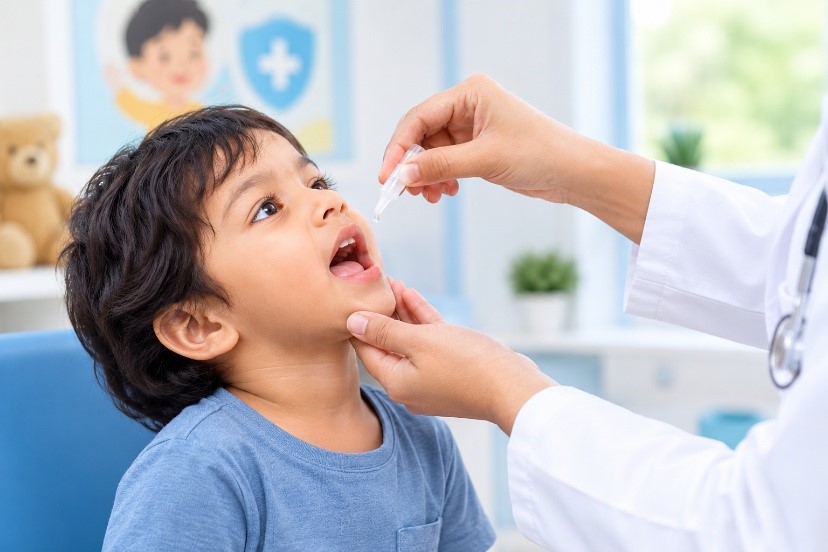
Polio protection is built through the recommended doses given at different stages of childhood. India’s immunisation programme includes oral polio vaccine and injectable polio vaccine according to the national schedule.
These vaccines help protect children in different ways. Following the recommended schedule gives your child the intended protection; missing or delaying doses may leave gaps.
If you have forgotten a dose, missed a vaccination appointment or are unsure what your child has received, don’t panic. Take the vaccination card to your paediatrician or immunisation clinic. They can review the record and advise you on the appropriate next steps.
What about the other children in the neighbourhood?
Vaccination is not just an individual decision. When more children are protected, it becomes harder for the virus to spread through a community.
But gaps matter. Some children may miss doses because families move homes, appointments are forgotten or access to healthcare is difficult. Others may be unable to receive certain vaccines for medical reasons and rely partly on community protection.
This is why routine immunisation and polio campaigns remain important even after a country has achieved polio-free status.
Your simple World Polio Day checklist
This 24 October, take a moment to check three things:
- Is your child’s vaccination card up to date?
- Have any recommended polio doses been missed or delayed?
- Do you need your paediatrician’s advice on catch-up vaccination?
Do not rely on memory or assume that participation in a polio campaign automatically replaces every routine vaccine dose. Follow your child’s vaccination record and current medical guidance.
India’s polio-free achievement is something to celebrate. Keeping children protected is how we help preserve it.
(The author is HOD & Director, Department of Paediatrics, Pacific OneHealth, Dwarka, New Delhi.)