Remember those polio booths and two drops? Here’s why the story isn’t over yet
 27 Reads
 3 minutes read

By Dr Sunil Sareen
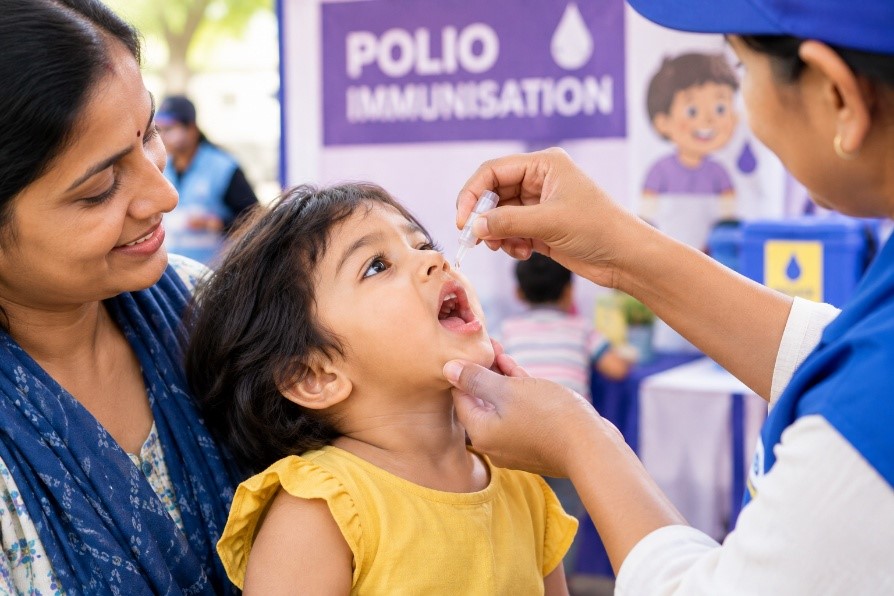
Do you remember those Sunday mornings when someone would remind you to take your child for two drops of polio vaccine? The queues, the vaccination booths, the announcements and the familiar purple-marked finger?
For millions of Indian families, these memories are part of childhood. But behind those two drops was a much bigger story: a country determined to stop a disease that could leave children paralysed for life. And today, that story still needs every parent’s attention.
How India turned the tide against polio
There was a time when polio was a serious public-health concern in India. Children could be left with lifelong weakness or paralysis, changing not only their lives but also those of their families.
India launched the Pulse Polio Immunisation Programme in 1995, building on a nationwide effort to reach children wherever they were. Health workers and volunteers travelled through neighbourhoods, visited homes and set up booths in public places. Families were encouraged to bring their children for vaccination.
It was an extraordinary collective effort. Government teams, healthcare workers, community organisations and parents worked together to reach children who might otherwise have been missed.
India’s last reported case of wild poliovirus was in January 2011. In March 2014, the country received official polio-free certification.
This achievement showed what sustained public-health action can accomplish when communities work together.
So, why are we still talking about polio?
Because polio-free does not mean polio has disappeared everywhere.
Wild poliovirus continues to circulate in parts of the world, and viruses can cross borders. If protection levels fall, the risk of transmission can return.
There is another important point: polio can cause permanent paralysis, and there is no cure once the disease develops. Vaccination is the key protection.
That is why India continues routine polio vaccination and conducts supplementary campaigns when recommended. These efforts help maintain protection and guard against the return of the disease.
“My child got the drops. Isn’t that enough?”
It is an excellent start—but parents should ensure that their child receives all recommended polio doses.
Campaign doses and routine immunisation serve important roles. One should not assume that attending a polio campaign means every routine vaccine requirement has been met.
Keep your child’s vaccination card safe. If you are unsure whether a dose was given, or if your child missed an appointment, ask your paediatrician to review the record and advise you on the next steps.
There is no need to feel guilty about a missed appointment. What matters is taking action rather than allowing uncertainty to continue.
The next chapter depends on us
World Polio Day, observed on 24 October, is not only a day to celebrate how far India has come. It is also a reminder that progress must be protected.
Parents can help by keeping vaccinations up to date, participating in official polio campaigns when advised and sharing accurate information with family members. If a child has missed doses, a healthcare professional can help determine what is needed.
Those two drops became a symbol of what India could achieve together. Let’s make sure the next generation remembers polio as a disease we kept away—not one we allowed to return.
(The author is Senior Consultant — Paediatrics, Pacific OneHealth, Karol Bagh, New Delhi.)