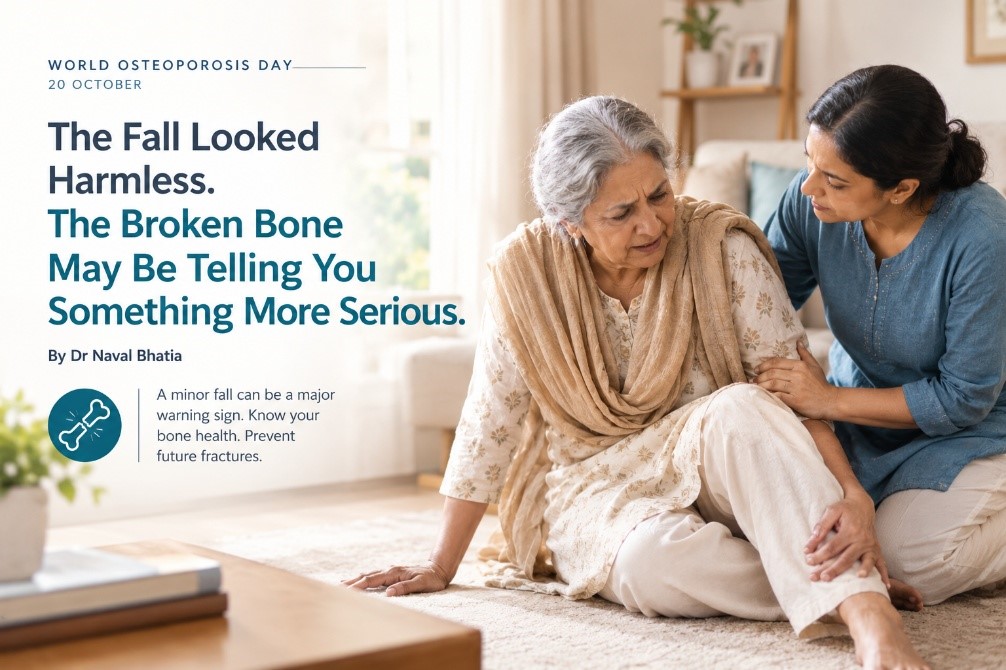
The Fall Looked Harmless. The Broken Bone May Be. Telling You Something More Serious
 35 Reads
 3 minutes read

By Dr Naval Bhatia
It may happen in the bathroom, while getting out of bed, after tripping over a doorstep, or
simply after losing balance while walking across a room. The fall seems minor, yet the fracture that follows leaves the family asking a worrying question: how could such a small fall break a bone?
Sometimes, the answer lies in a condition that may have been developing silently for years:
osteoporosis.
“But it was only a small fall!”
That is precisely why the injury deserves attention. Healthy bones may withstand a minor fall
with little more than bruising, whereas weakened bones can fracture under relatively lowimpact force. The hip, wrist and vertebrae are particularly vulnerable.
Osteoporosis gradually reduces bone strength and often causes no obvious symptoms. Many
people feel well until a fracture brings the condition to light. It is easy to blame the slippery
floor, the fall or a moment of carelessness. But an important question is whether the bones
were strong enough to withstand the impact.
A fracture is not always the end of the story
For an older adult, a broken bone can mean much more than a few weeks of recovery.
Walking, climbing stairs, bathing independently and returning to everyday routines may
become difficult. Someone who was previously independent may suddenly need help with
simple tasks. Fear of another fall can also lead to reduced movement, which may further affect strength and confidence.
That is why treating the fracture is only part of the job. If a fracture occurs after a minor fall— particularly in an older adult—it is worth discussing bone health and the possibility of
osteoporosis with a doctor. Depending on the person’s age, medical history and circumstances, assessment may include a bone-density test and other investigations.
A fracture should not automatically be dismissed as “just an accident”.
Can another fracture be prevented?
In many cases, steps can be taken to reduce the risk of future fractures. The first step is to
identify and address the underlying risk. Treatment is individualised and may include
prescribed medication, adequate calcium and vitamin D when needed, appropriate weightbearing and strengthening exercise, balance training, and practical changes to make the home safer.
Calcium supplements or osteoporosis medicines should not be started solely because someone has fallen. The right approach depends on the individual’s health, risk factors and clinical assessment, and should be guided by a healthcare professional.
A question worth asking this World Osteoporosis Day
If a parent or older family member has fractured a bone after a minor fall, do not stop at
asking, “Has the bone healed?” Also ask, “Have we checked why it broke?”
World Osteoporosis Day is observed on 20 October. A fracture can be an important warning
sign about bone health. Recognising the risk and seeking an appropriate assessment may help reduce the chance of another fracture.
At Pacific OneHealth, New Delhi, Dr Naval Bhatia and the Institute of Orthopaedics & Joint
Replacement provide orthopaedic assessment and care tailored to each patient’s needs.
After a fracture, the goal is not only to help the bone heal, but also to help protect the person from the next one.
Author note: Dr Naval Bhatia is Principal Director, Institute of Orthopaedics & Joint Replacement, Pacific OneHealth, New Delhi.