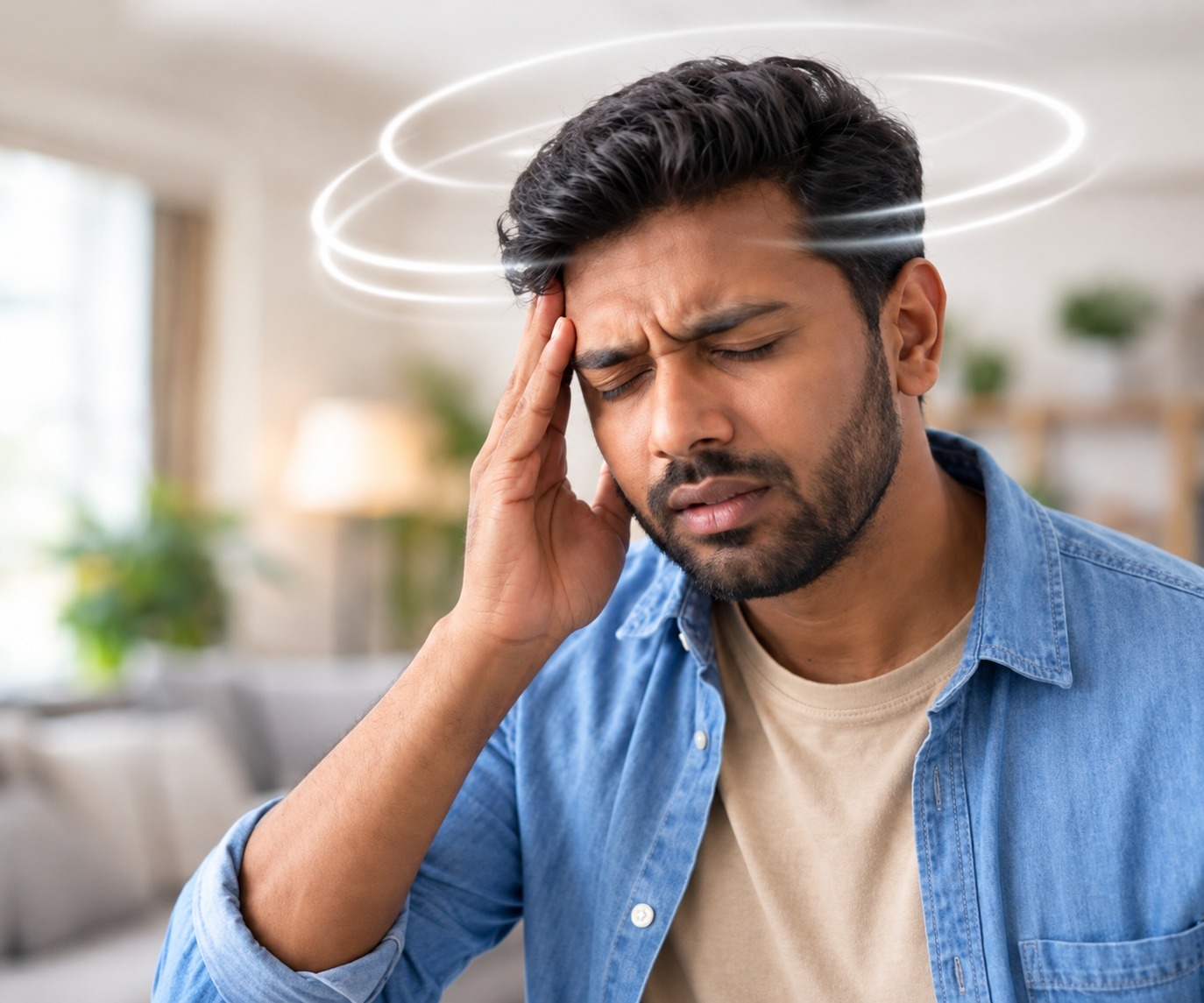
Why Do People Feel Dizzy Suddenly? Causes, Symptoms & Treatment Options
 178 Reads
 5 minutes read

Dizziness is common enough that most people dismiss their first few episodes as tiredness or skipping a meal. Most of the time that explanation is correct. But dizziness is a symptom with a wide range of causes, some trivial, others clinically significant. A 30-second spinning sensation when rolling over in bed is almost certainly BPPV. The same spinning lasting hours with simultaneous hearing changes is Ménière’s disease. Dizziness with one-sided weakness is a stroke until proven otherwise. Knowing which pattern applies is what determines whether the right response is rest or an emergency department. A dizziness specialist hospital in Lajpat Nagar, with the diagnostic range to distinguish between these, is the right resource for any dizziness that keeps recurring.
Overview of Sudden Dizziness
Dizziness treatment describes several distinct sensations:
- Vertigo: illusory rotational movement of the patient or environment
- Presyncope: feeling a faint is imminent; lightheadedness, visual greying
- Disequilibrium: unsteadiness without a clear rotational sensation
- Non-specific dizziness (“swimming” or “fuzzy-headed”), often reflecting anxiety, hyperventilation, or medication effects
The distinction matters because each category has a different differential diagnosis, and this area is where specialist assessment at a dizziness clinic near Delhi NCR adds real value.
Common Causes of Sudden Dizziness
Inner ear disorders
- BPPV is the most common cause it’s brief, intense rotatory vertigo triggered by position changes and resolved with the Epley manoeuvre
- Vestibular neuritis: acute, severe, constant vertigo lasting days to weeks, without hearing involvement
- Labyrinthitis: vertigo plus simultaneous hearing loss
- Ménière’s disease: episodic vertigo lasting 20 minutes to several hours, with fluctuating hearing loss, tinnitus, and aural fullness
Low blood pressure and orthostatic hypotension: a drop of ≥20 mmHg systolic on standing reduces cerebral perfusion and causes presyncope. This condition is common in older adults and in those taking antihypertensive medications.
Dehydration volume depletion reduces circulating blood volume and produces lightheadedness, one of the most easily correctable causes.
Blood sugar fluctuations: Hypoglycaemia produces lightheadedness, sweating, and cognitive slowing. Point-of-care glucose testing at the time of symptoms is most informative.
Anxiety and stress Hyperventilation lowers arterial CO₂, causing cerebral vasoconstriction and lightheadedness. Anxiety-related dizziness is a diagnosis of exclusion after vestibular and cardiovascular causes are formally excluded.
Neurological conditions: Vestibular migraine produces episodic vertigo in the context of a migraine disorder. The HINTS examination distinguishes posterior circulation TIA from stroke. A normal head impulse test in an acutely vertiginous patient is a concerning sign of central pathology.
Heart and circulatory problems: arrhythmias cause intermittent reductions in cardiac output, producing presyncope, often with palpitations. ECG during symptoms is the diagnostic gold standard.
Symptoms Requiring Emergency Assessment
Seek emergency care or balance disorder treatment, not a routine appointment, for the following:
- Sudden severe headache unlike any previous headache
- New-onset diplopia, dysarthria, or dysphagia
- Unilateral facial or limb weakness
- Loss of consciousness
Treatment Options
Vestibular rehabilitation therapy is the most evidence-based treatment for chronic vestibular disorders, promoting central compensation through gaze stabilisation and balance training.
Canalith repositioning (Epley manoeuvre) resolves 80–90% of posterior canal BPPV cases in a single correctly performed session. Correct canal variant identification before treatment is essential.
Medications, vestibular suppressants, are useful acutely but should not be used long-term, as they delay central compensation. Migraine prophylaxis targets vestibular migraine. Betahistine is used for Ménière’s to reduce attack frequency.
Managing underlying conditions cardiac arrhythmia, orthostatic hypotension, anxiety, and metabolic causes each require their own directed management.
Prevention Tips
- Rise from lying or sitting slowly; pause 30–60 seconds before standing fully
- Maintain consistent hydration, including electrolytes during heat or exertion
- Monitor blood sugar at symptom onset if prone to hypoglycaemia
- Complete vestibular rehabilitation, fully stopping early is the most common reason for relapse
- Schedule follow-up at a dizziness clinic near Delhi NCR when symptoms recur the pattern across visits tells a specialist more than a single presentation
Conclusion
The dizziness that comes on suddenly is usually brief, but don’t ignore symptoms that persist or recur. Dizziness can arise in different ways from inner ear disorders, changes in blood pressure, anxiety, neurological disease and cardiac conditions. The essence of good management is to identify the cause, not just suppress the symptoms. If you are experiencing repeated dizziness, balance problems, hearing changes or neurological symptoms, you should be evaluated at a dizziness specialist hospital in Lajpat Nagar to receive an accurate diagnosis and targeted treatment before your symptoms start interfering with daily life.
FAQs
Q: What is the most common cause of sudden dizziness?
BPPV is the most common cause of episodic vertigo overall. Orthostatic hypotension is the most common cause of lightheadedness on standing.
Q: When should I go to hospital for dizziness?
Immediately if dizziness accompanies neurological symptoms, weakness, speech difficulty, facial droop, or sudden severe headache.
Q: Can anxiety cause dizziness?
Yes, through hyperventilation and autonomic activation. But vestibular and cardiovascular causes should be excluded before attributing dizziness to anxiety.
Q: Does the Epley manoeuvre work for all types of vertigo?
No, it is specifically for posterior canal BPPV. Applying it to horizontal canal BPPV or non-BPPV conditions is ineffective or counterproductive.