Your knees aren’t “just getting old” — They’re sending you a warning you’re ignoring
 47 Reads
 3 minutes read

By Dr Naval Bhatia
“Doctor, it’s nothing serious. I’m getting older, that’s all.”
I hear this sentence often.
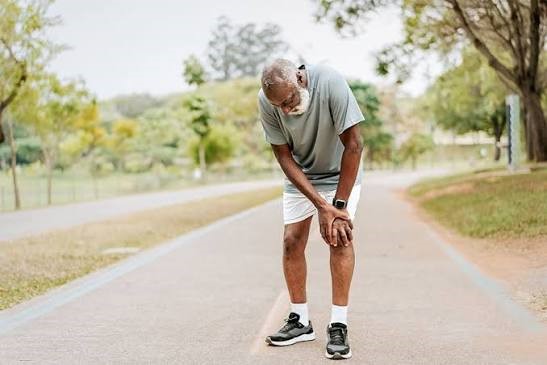
A little pain while climbing stairs. A struggle getting up from a chair. Stiffness after sitting for a while. Maybe a knee that starts hurting after a long walk.
So, what do we do?
We ignore it.
We take a painkiller. Apply some oil. Rest for a few days. Then, when the pain settles, we forget about it.
Until it returns.
And then we tell ourselves the same thing: “Ageing hai. What else can it be?”
But your age may not be the real story.
The knee pain you have learnt to live with
Knee problems often creep into life quietly. First, you stop sitting on the floor. Then you start avoiding stairs. You choose the lift even for one floor. You stop going for your evening walk. You think twice before travelling. You avoid playing with your grandchildren. And one day, you realise something uncomfortable:
Your knee hasn’t just started hurting. It has started making decisions for you.
That is the point at which knee pain deserves attention.
Osteoarthritis, one of the common causes of long-term knee pain, can cause pain, stiffness and difficulty with everyday movement. Importantly, treatment is not simply about looking at an X-ray. Doctors consider your symptoms, movement and how much the problem is affecting your life. (NICE)
But does every painful knee need a replacement?
Absolutely not.
This is another myth patients often worry about.
Depending on the condition, treatment may include suitable exercise, strengthening, weight management where appropriate, medicines or other non-surgical approaches. Surgery is considered when symptoms continue to have a major impact on daily life and other treatments have not helped or are unsuitable. (NICE)
So, the real question is not:
“Am I old enough for a knee replacement?”
It is:
“Why is my knee stopping me from living normally?”
Don’t wait until your world becomes smaller
If your knee repeatedly hurts, swells, feels stiff, gives way, or makes ordinary activities increasingly difficult, don’t simply write it off as “getting old”.
Getting checked does not mean you are signing up for surgery. It means you are finding out what is actually happening.
And if replacement eventually becomes appropriate, the decision should be based on your symptoms, function, overall health and a proper discussion of the available options—not simply your age. (NICE)
After more than four decades in orthopaedics and joint replacement, my message to patients is simple:
Don’t normalise pain just because it has become familiar.
Growing older is natural.
Living with avoidable pain does not have to be.
(The author is Principal Director, Institute of Orthopaedics & Joint Replacement, Pacific OneHealth, New Delhi)